
Notes on Getting Destroyed
the journalist to influencer pipeline is ruining my life (and maybe yours)

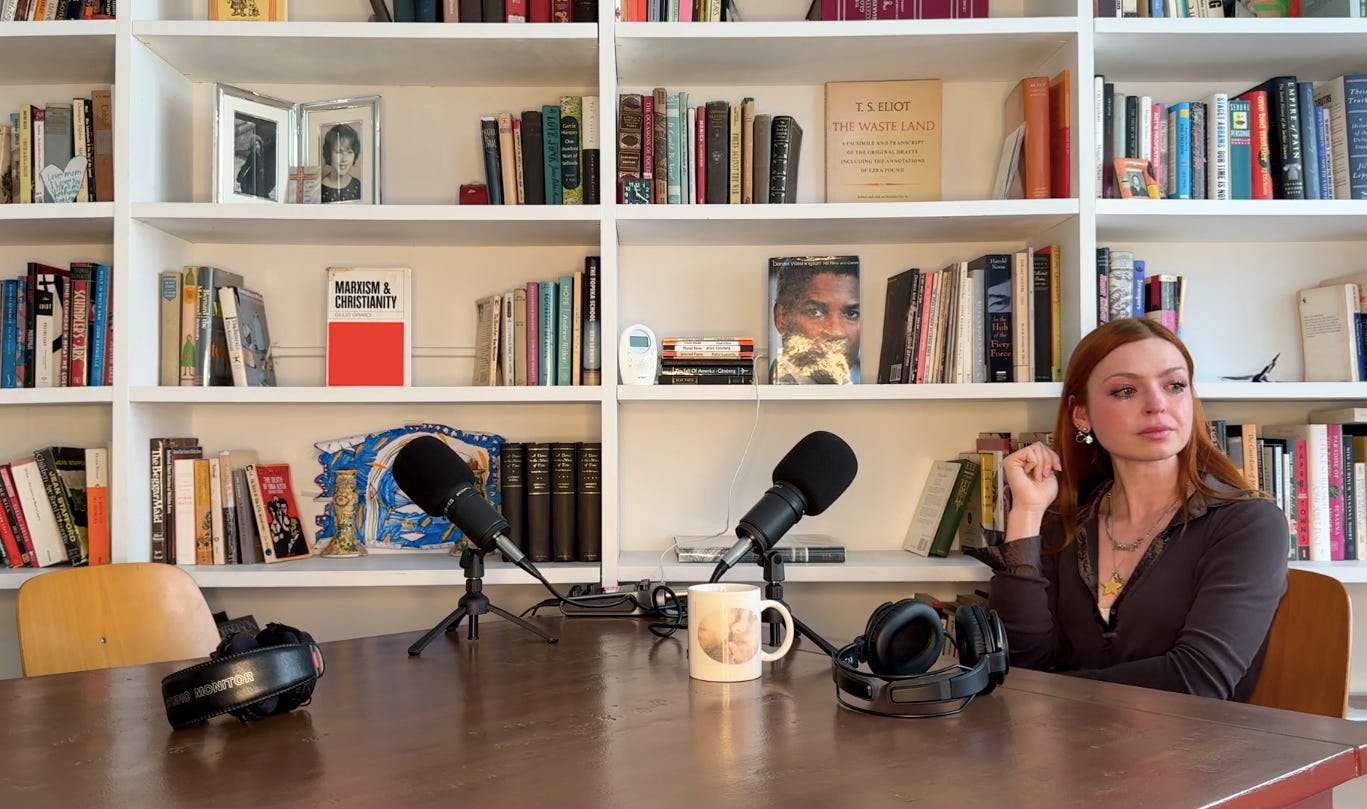
For the last couple of years I’ve been on what can only be described as a never-ending media tour. I talk about porn, obscenity law, and censorship. There is a huge range in the style of media I’ve been on, and in the level of hostility I’ve been approached with by interviewers. During one of my earlier experiences, I went on a fairly well-known podcast where one interviewer spent the entire time making jokes at my expense, most of them sexual- miming me deepthroating the mics, for example, and implying that they were going to humiliate me somehow in post-production or advertising. At one point he said the episode would be titled “Porn Historian Gets Destroyed.”
I thought about this recently when someone (respecting their privacy) asked me if I had been on the Whatever podcast- a show seemingly designed around the interviewer, an objectively wretched middle-aged man, attempting to humiliate a panel of young women, usually OF models.
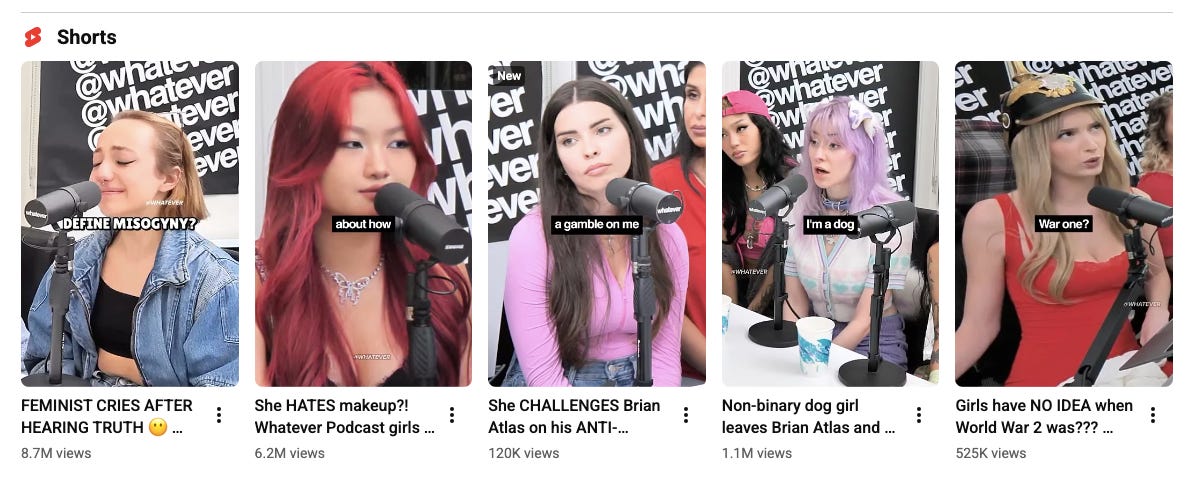
A clip of her appearance went viral, showing her dodging the humiliation ritual and flipping it back on said wretched middle-aged man. I told her that we had DM’d a few times, but I wasn’t sure if I actually wanted to go through with it.
“Yeah, you need a gotcha moment,” she said.
The “gotcha moment” is the victor’s perspective of when someone “gets destroyed.” It is also the prize for winning. You’ve seen it; it’s what does best for clip farming on social media and has launched political commentary careers of many, including doomed Redscare podcaster Dasha Nekrasova.
There’s a lot of general commentary to make here, of course- about polarization, and the bloodlust in watching political commentary goons fight to the death until one man leaves the Colosseum with viscera-stained sandals.
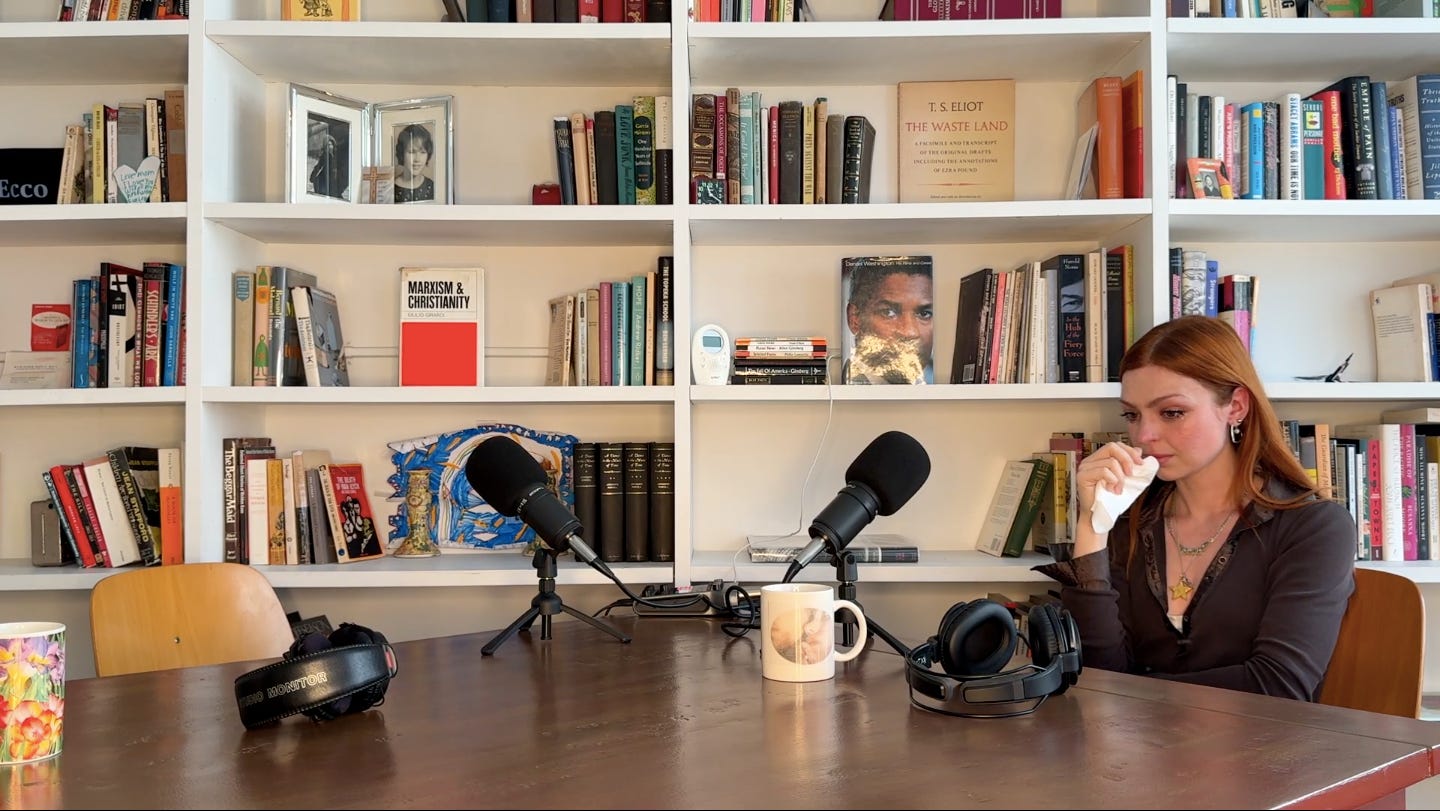
But in personal news, I semi-recently got destroyed. Or, I had a breakdown- a real, hysterical crying breakdown- while filming an interview. It had never happened to me before. I’d like to tell you about it.
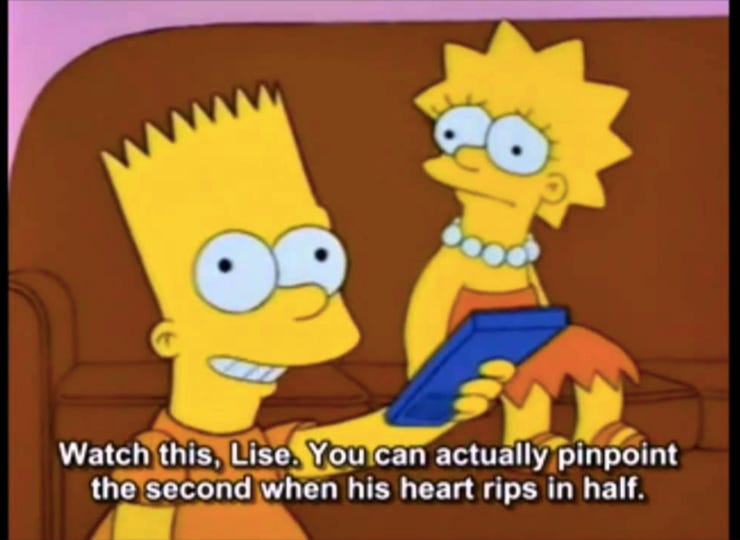
First of all, I have a mental illness where I assume all beautiful women are my allies, so admittedly I didn’t do my due diligence before showing up to record what I thought would be a relative softball podcast interview, or at least some iteration of the same 12 questions I get asked bi-monthly in alternating order.
Instead, it was an intense and frustrating conversation about morality, hypotheticals, addiction and substance abuse. I don’t think twenty minutes had gone by before the interviewer brought up losing a friend to addiction as an argument for banning pornography.
I have had this conversation before- in fact, the interview questions were based on a debate I did only a couple of weeks prior. But in this instance, in this very beautiful woman’s very beautiful apartment, I broke. For reasons that are inappropriate to share on Substack, I was/am having a really hard time with this subject, and I broke.
I could feel it before it happened- getting hot, the rush in my ears, suddenly not being able to say anything at all. Then I was crying and begging that we stop recording. I wasn’t even embarrassed at first, because I was so overwhelmed by how upset I was. Nothing else existed. I sat there staring at a wall while the interviewer- shocked- buzzed around, turning cameras off and offering tissues that I don’t even think I registered. After a few minutes, I calmed down enough to feel exposed and embarrassed, waking up naked in a stranger’s home.


Socially, when something like this happens- an outsized, inappropriate or unexpected emotional reaction- I have the urge to overshare why. I become a caricature of my circumstance, force-feeding the justifications of my misery to whoever is in the splash zone.
So in the aftermath, I vomited everything onto her in a way that was so pathetic she (very kindly) gave me her number to call if I needed to. We then resumed filming, fought (not for show- I genuinely hated some of the things she was saying), then after filming stopped, debriefed our disagreement. It was one of the most intense social experiences I have ever had in my life- in terms of the intensity but also the breadth. In many ways it felt very beautiful, and I left feeling exhausted but overwhelmed with gratitude.
The interviewer was very kind to not include my breakdown in what she released- though she could have. It wouldn’t contain any of my extensive explanation of the emotional circumstance I was in, my own various relationships with addiction, and with grief. Nor would it have her very kind response, or our final debrief on how our cultural backgrounds influence our philosophies.
I know the best performing version of that clip, because I’ve seen it hundreds of times with thousands of faces- you’ve probably seen it too, or at least can envision it. A thirty-second clip, wide shot of us both, mid-range shot of my interviewer starting to go hard on the issue of substance abuse. Cut to my face, still holding on to the interviewer’s audio. Extreme close-up as I start to cry. Slow-mo clip of me asking to stop filming, maybe a hiccup for comedic effect.
Would have done numbers.
A piece of DiscourseTM from this year has been that, in order to be a journalist, one must be an influencer. Legacy media institutions have been hemorrhaging for years, with journalists across party lines bailing in favour of social media platforms (like this one) and front-facing video.
There are benefits to this populace, new-media dominance; I’m certainly not going to go to bat defending Condé Nast and its contemporaries. But I think what’s missing from the “in order to be a journalist, one must be an influencer” conversation is that, for most people, in order to be an influencer, one must be a lolcow.
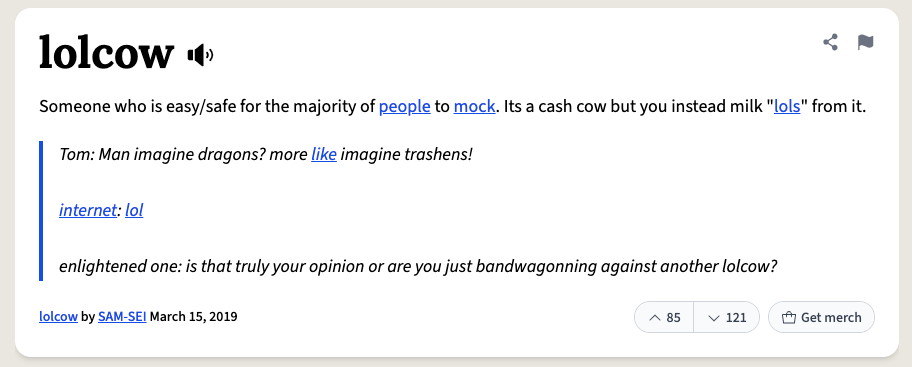
To post online at all requires a certain degree of submission to lolcow animorphism; an open and earnest call for attention is vulnerable and embarrassing. But the more brutality the lolcow is willing to expose their tender bellies for, the better. Oversharing, arguments, crying on camera, embarrassment, crisis- all do well. A true lolcow downfall sees its subject analyzed by commentary accounts, clipped, memed, and repurposed over and over.
Part of this system is algorithmic design- controversial content attracts comments, which is rewarded by wider reach. Send and share features allow for the social element of social media, but also create well-paved roads for talking shit and spectating. This is especially true for women, for reasons I’ve spoken about in past articles. The attention economy, by and large, responds particularly well to women’s misery and failure. People are obsessed with it.
I think I’m actually a great lolcow candidate- see above. I have considered myself “good at fighting,” “good at debate,” “good at arguing” for my whole life, and I am relatively fine with being publicly hated.
But I am, transparently, really struggling. I don’t know if I can maintain a competitive level of binary in my work- or more importantly, in my own thinking. It feels like I’m visibly coming apart at the seams.
It is exhausting to hold a perspective like a weapon, and it’s not even productive. I know that people don’t change their minds based on a well-reasoned argument; I know that everyone is just watching “gotcha” clips that align with what they already believe.
It’s a well-established psychological fact that people change their minds based on much subtler social and community influence. They are motivated largely by how they feel- not necessarily what seems the most factual.
So if it doesn’t work, why are all these journalists-turned-lolcows on the slaughterhouse conveyor belt? What the fuck are we even doing here?
In pornography, it’s become en vogue recently to post pre- and post-scene footage- the consent conversations, the aftercare, the glistening bodies settled, comfortably slouched around the snack table sipping juice boxes. This is, in most part, educational- it reminds people that pornography is not real life- that these clips, so many of them titled similarly to this article, do not represent the entirety of their human experience.
I’ve become curious about what that would look like in other media spaces- how many of these people are having more nuanced, vulnerable conversations just off-screen, just out of earshot? I would love to hear them.
"I have a mental illness where I assume all beautiful women are my allies" gave me a good lol of the non-cow variety. beautiful piece! cheering you on 🖤
Thank you for sharing your story. I don't see you as a lolcow because I take your work seriously in analyzing the art of pornography.